Transit-Oriented Development (TOD)

TOD includes a mix of commercial, residential, office, and entertainment centered around or located near a transit station. Dense, walkable, mixed-use development near transit attracts people and adds to vibrant, connected communities.

Federal Transit Administration (FTA)

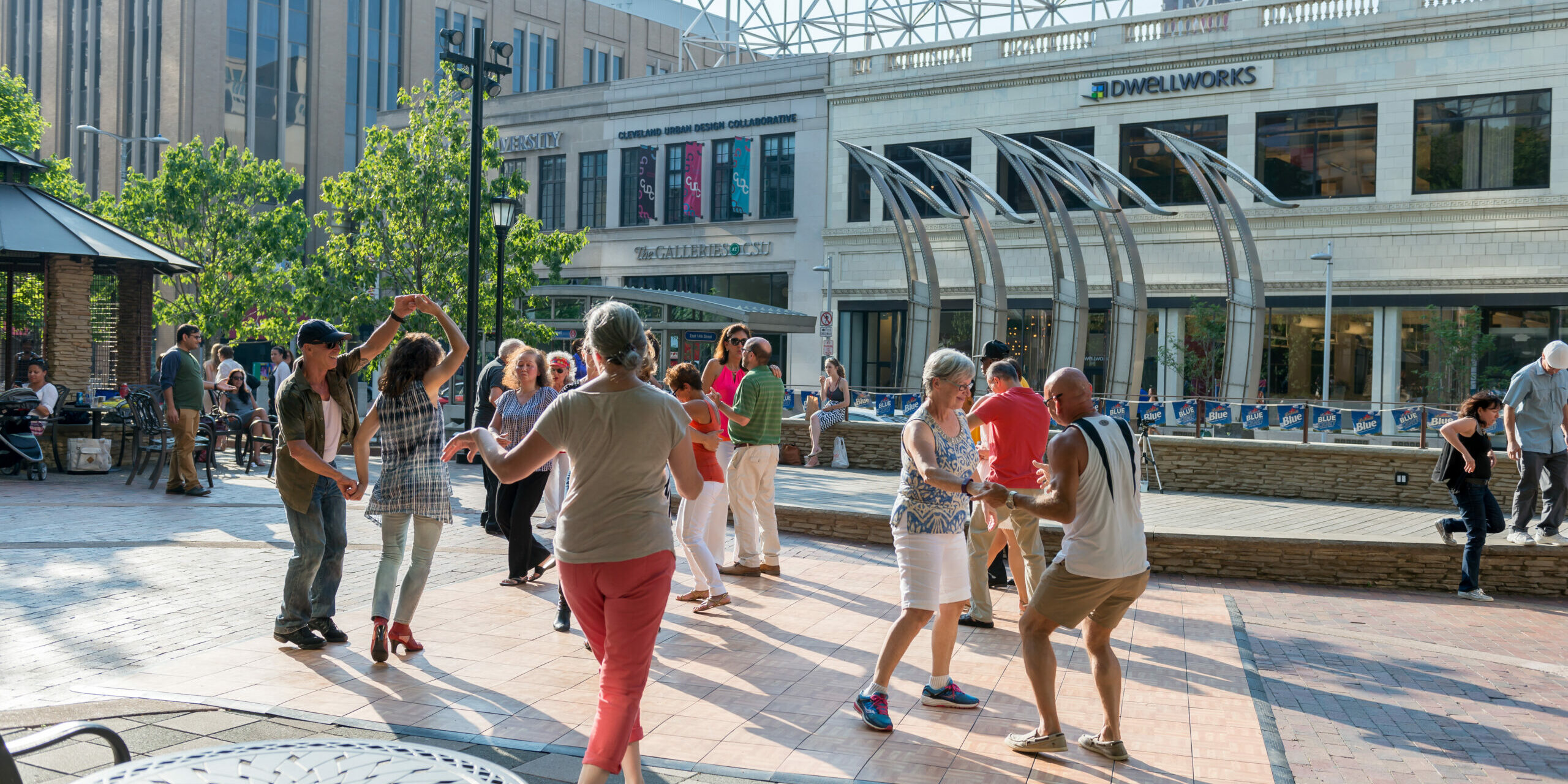
People dancing at Playhouse Square Plaza, which is along GCRTA Healthline BRT

Elements of TOD

TOD can look different based on the location, types of nearby buildings, and the overall community character and history; however, there are common elements that are shared among TODs as detailed below.

Transit-Focused

Developments are intentionally located near stops and stations and designed to make transit more convenient and accessible, thereby making it easier to get around without a car.

Walkable

Buildings connect directly to sidewalks, have welcoming entrances, and include inviting public spaces. This makes walking to shops, restaurants, and other places enjoyable and safe.

Social

People living, working, and visiting in an area contribute to a 24/7 active and engaging place, creating stronger connections, businesses, and value.

Mixed-Use

Stores, restaurants, offices, homes, and public spaces are all in the same area—or even in the same building—so you can live, work, shop, and relax without needing to drive everywhere.

Benefits of TOD

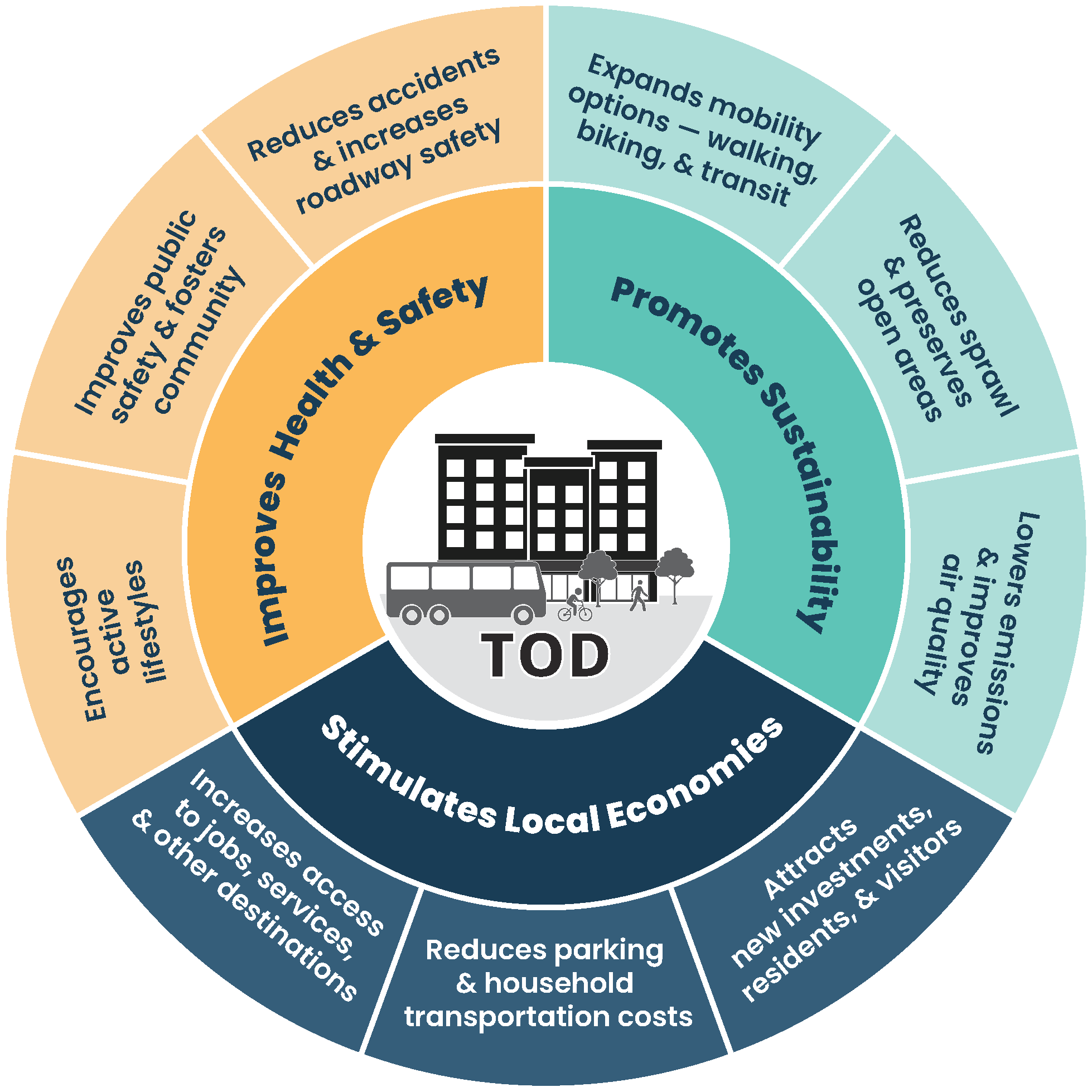
Increases Ridership: TODs typically reduce single-occupant vehicle commuting by 15–30%, about half of which shifts to transit.

Enhances Safety: The American Public Transportation Association (APTA) found that metro areas with more than 40 annual transit trips per capita had around half the traffic fatality rate of metro areas with fewer than 20 transit trips per capita.

Improves Job Access: In Chicago, households near new TOD projects had, on average, transit access to 1.73 times more jobs than households that were not near TOD projects.

Reduces Household Costs: In a 2019 APTA study of seven different regions, one in four households in transit areas did not own a vehicle and spent between $2,500 and $4,400 less per year on average on transportation costs.

Attracts investment: There has been over $10 billion in investment along the Euclid corridor since the opening of the HealthLine Bus Rapid Transit (BRT), including mixed-use developments such as Link59, MidTown Collaborative, and Foundry Lofts.

 The listed stats and associated sources can be found in County Planning's State of TOD publication.

Local Examples of TOD

Van Aken District
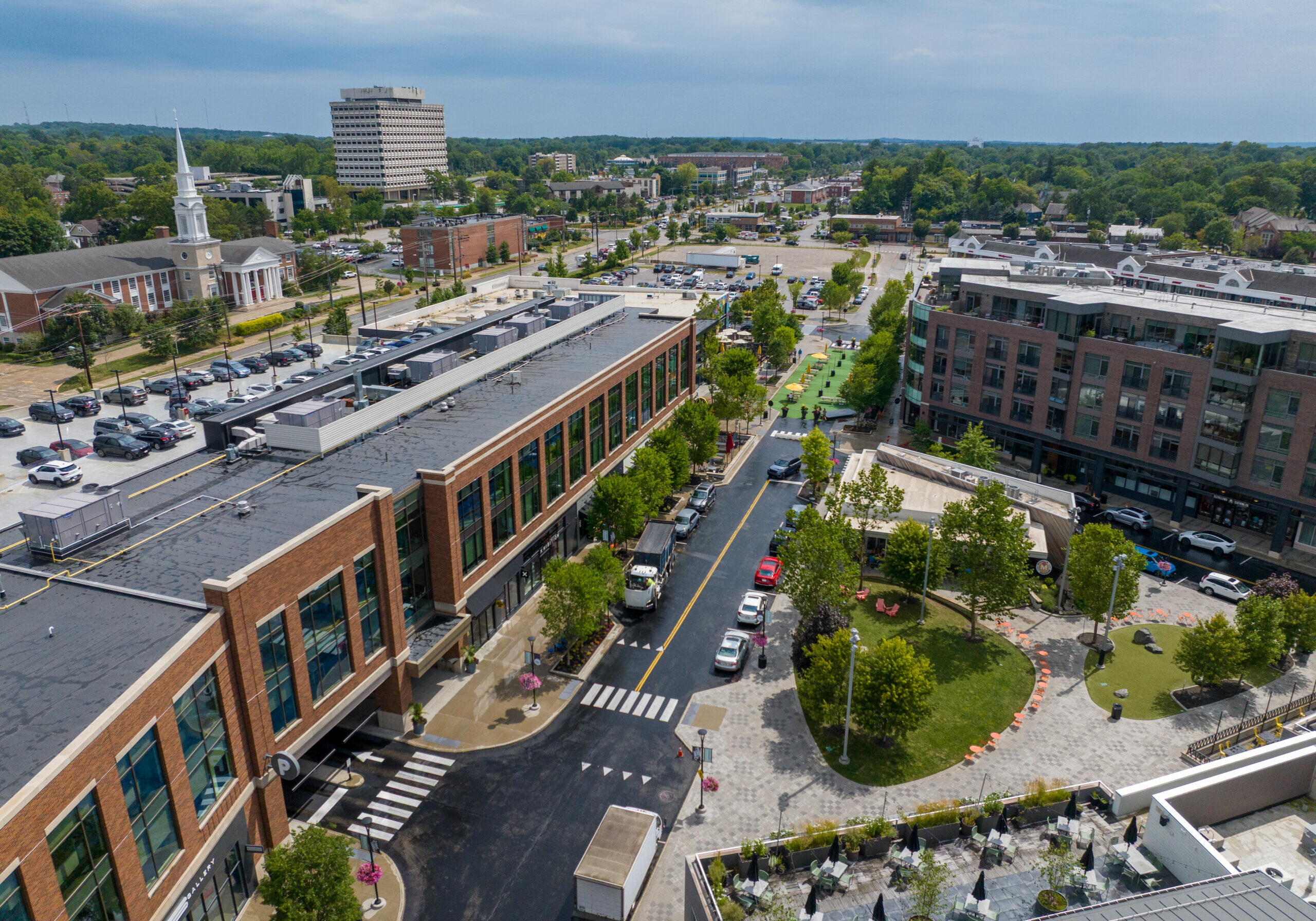
Bird's-eye view of Van Aken District

A 20+ year strip center redeveloped into a walkable neighborhood center with apartments, restaurants, offices, and stores situated around GCRTA's Warrensville - Van Aken Rapid Station.

Aspen Place
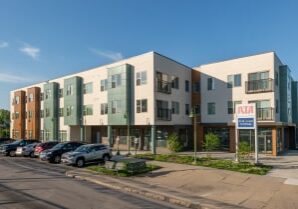
Street view of the Aspen Place Building

A previously GCRTA-owned vacant lot redeveloped into an affordable living complex with first floor retail that sits adjacent to GCRTA’s W. 65th - Lorain Rapid Station.

Fairfax Market
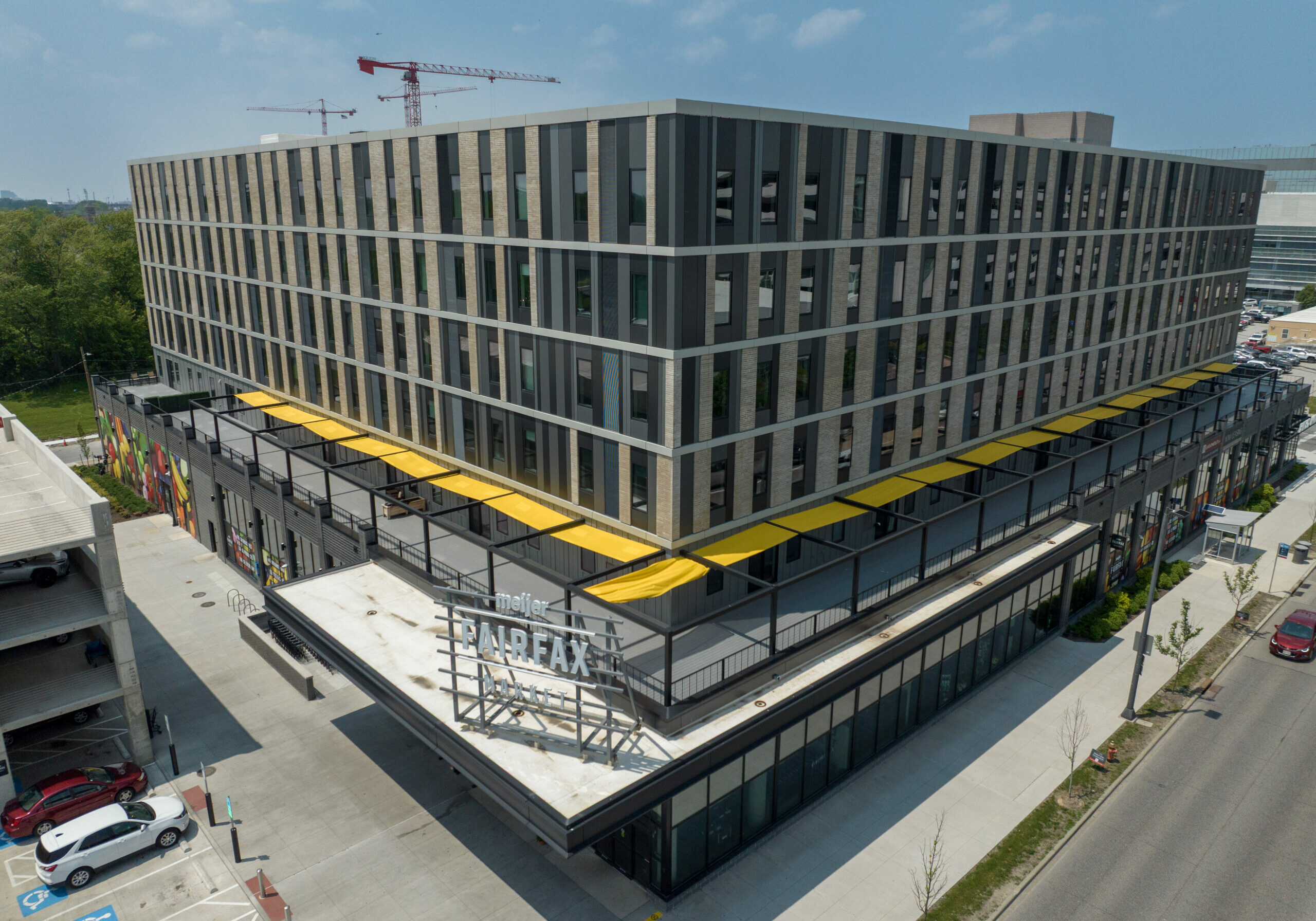
Bird's-eye view of Fairfax Market building

An apartment complex with a 40,000-square-foot, first floor grocery store in an area previously deemed as a food desert in Cleveland’s Fairfax neighborhood.

Harbor 44
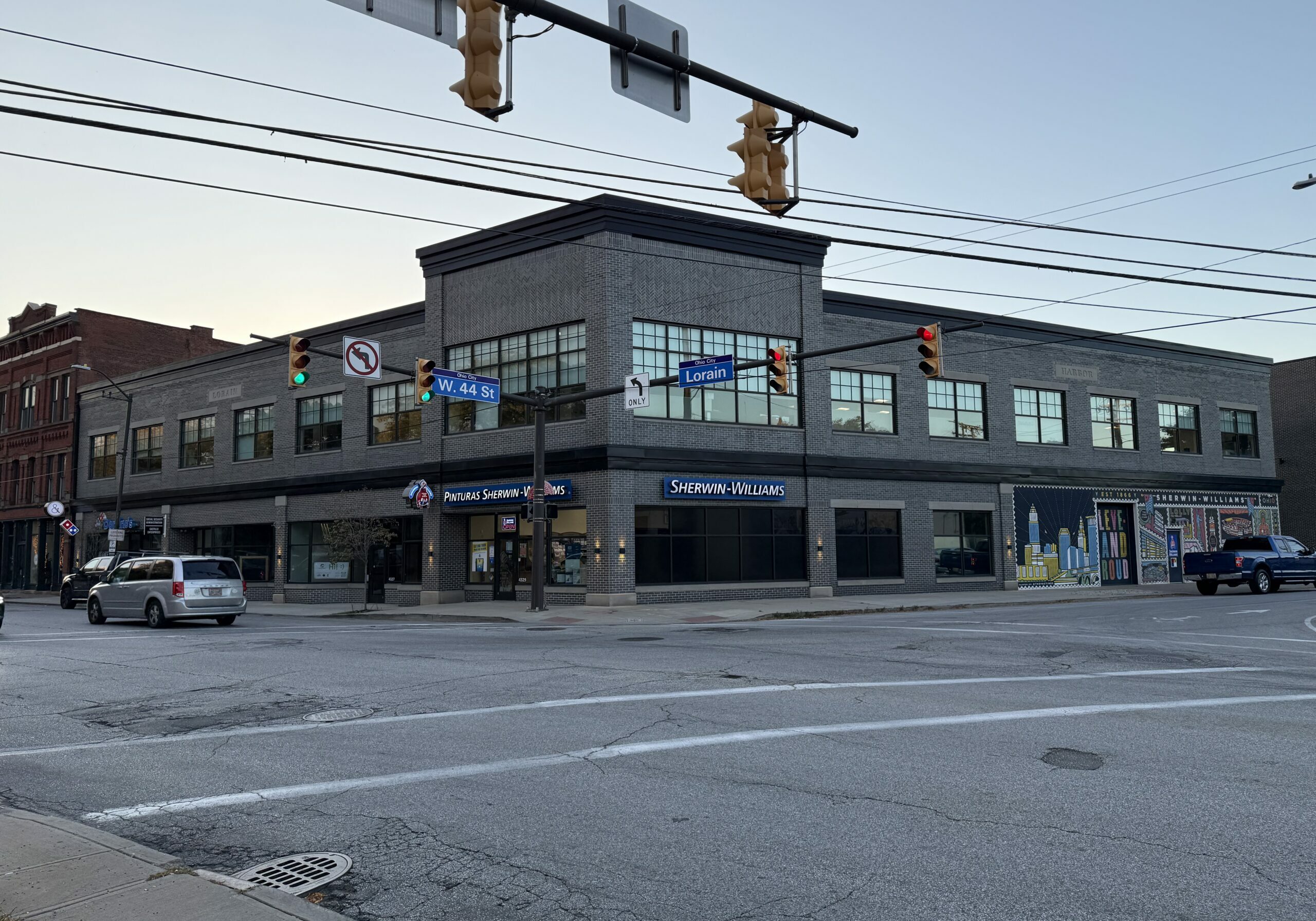
Street view of Harbor 44 building

A two-story commercial building with first floor retail and second floor offices, helping to enhance an existing main street and frequent transit corridor, Lorain Avenue within Cleveland’s Ohio City neighborhood.

Midtown Collaborative
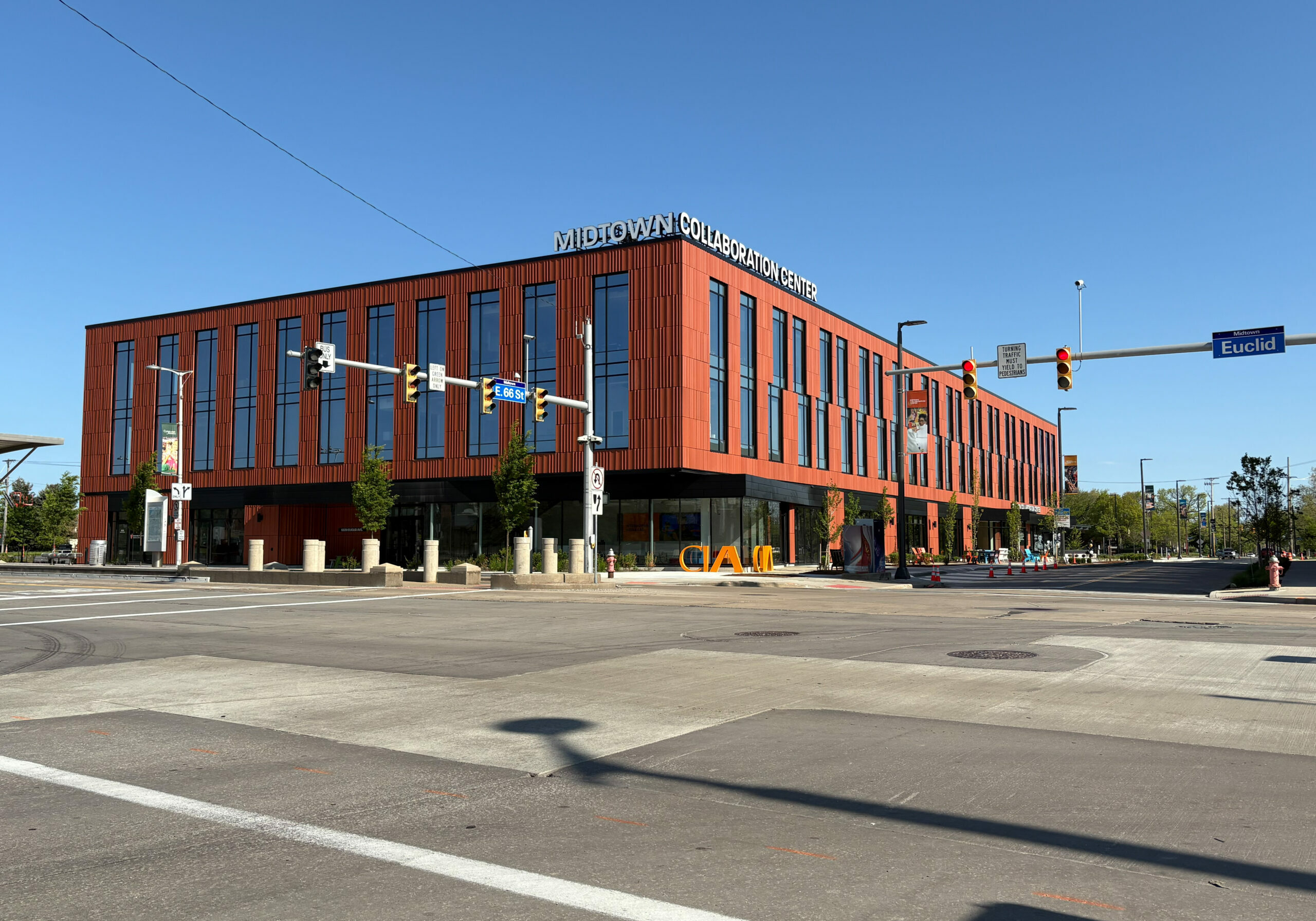
Street view of Midtown Collaborative building

A multi-tenant collaborative space offering financial services, workforce development, medical research, retail, and entertainment along GCRTA’s HealthLine BRT.

CentroVilla 25
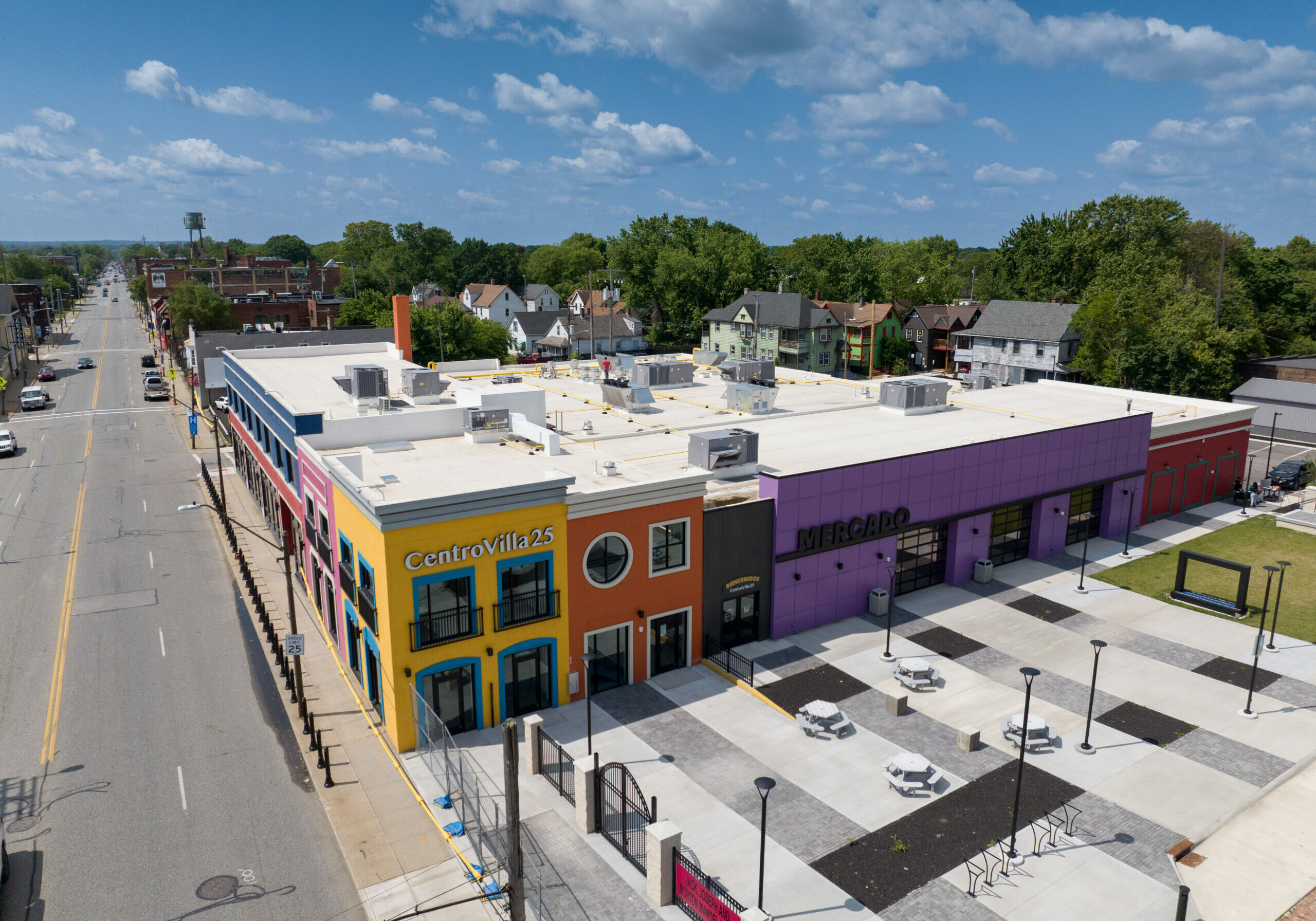
Bird's-eye view of the Centrovilla 25 Building

A repurposed, rehabilitated warehouse with a Latino market, food hall, offices, and community spaces in La Villa Hispana within Cleveland’s Clark-Fulton neighborhood along GCRTA's MetroHealth Line.

PARTNERSHIP
Cuyahoga TOD is a partnership between the Cuyahoga County Planning Commission, Greater Cleveland Regional Transit Authority, Port of Cleveland, City of Cleveland, and Cuyahoga County.
CONTACT US!
Have a question or concern? Not sure who to reach out to or how to get started? Use this form to send a message to our team and we can help direct it to the right people.
Please enter your name.
Please enter a message.